The Field Stays Human. The Office Gets Intelligent.
How trade and service businesses can use AI right now — starting with one workflow.
For the past several months I’ve been working directly with trade and service businesses — pool care, landscaping, HVAC, plumbing, the companies that keep our communities running — and asking them one deceptively simple question: where does your time actually go?
The answers are almost never about the field work. The craft is dialed in. These are people who can diagnose a failing compressor by sound or read a lawn’s health at a glance. Where the hours disappear is everywhere else: scheduling, quoting, invoicing, follow-ups, callbacks, paperwork. The office — not the truck — is where good service businesses quietly leak time, money, and energy.
That’s exactly where artificial intelligence belongs. Not replacing the technician. Supplementing everything around the technician, so the humans can focus on what they do best: creating value for customers, face to face, on the property.
Robots Aren’t Taking the Trades — But the Math Is Changing
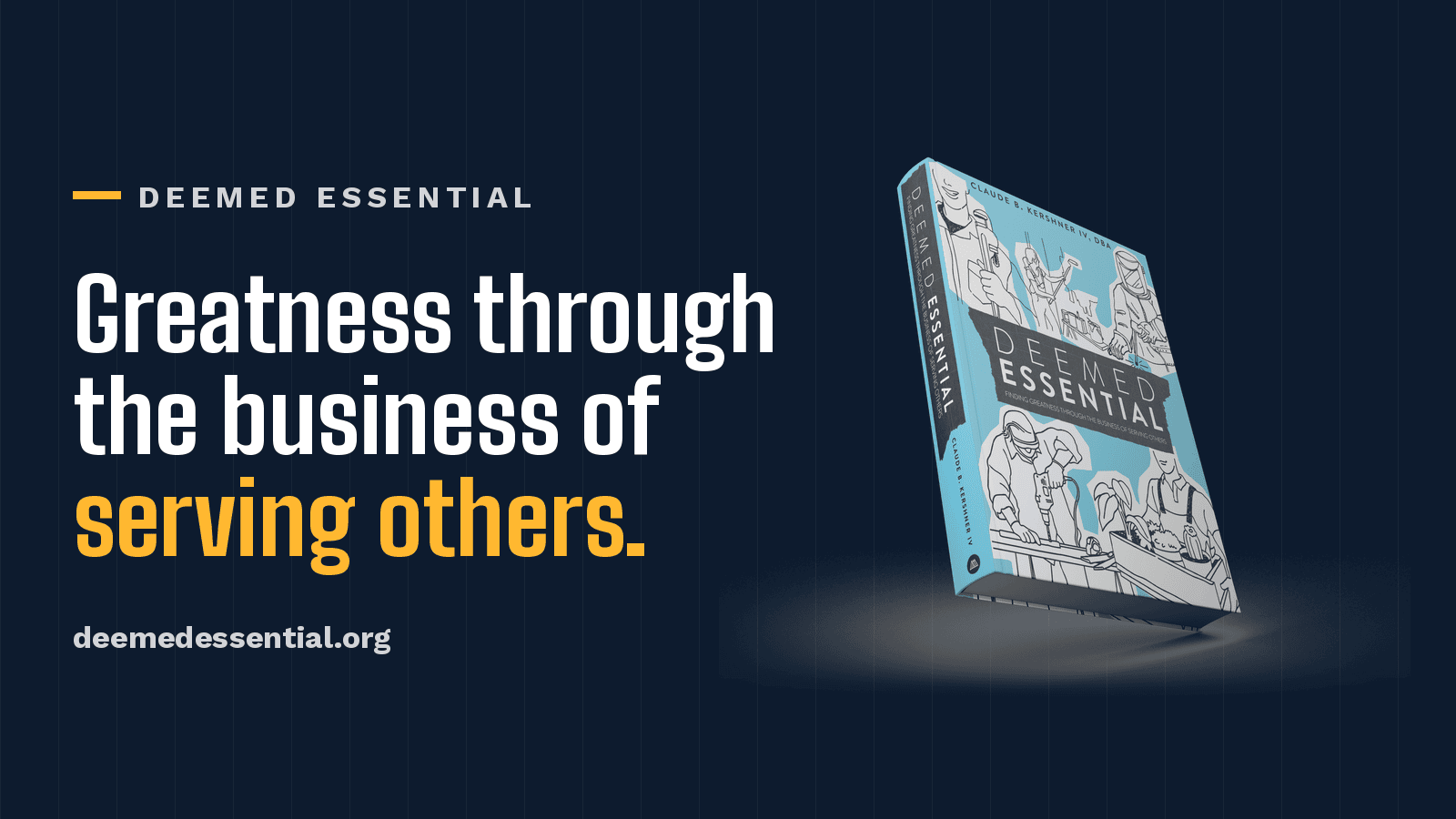
Let me be honest about both sides of this. No robot is showing up to rebuild a pump room or renovate a landscape this year, and the skilled trades remain among the most durable, purpose-driven careers in our economy. That’s a core theme of my book, Deemed Essential — the dignity and greatness found in the business of serving others.
But I won’t tell you field automation is impossible. The technology is moving faster than any of us expected. Which is precisely why the smart move isn’t to wait and see — it’s to build your company’s intelligence now, while your craft and customer relationships are the moat they’ve always been.
The data backs this up. Industry research in 2026 shows service businesses using AI for scheduling, quoting, invoicing, and customer communication are saving hours every week per person and responding to customers dramatically faster than competitors — and the biggest barrier to adoption isn’t cost, it’s simply not knowing where to start (Jobber, 2026 Home Service Trends).
The Organizational Singularity — Scaled to a Family Business
If you want the big-picture version of what’s happening, I highly recommend the Moonshots podcast conversation between Peter Diamandis and his co-host Salim Ismail — author of Exponential Organizations and one of the clearest thinkers alive on how companies must restructure around AI. Ismail calls it the organizational singularity: the moment when AI-native workflows let organizations sense, decide, and adapt faster than traditional hierarchy ever could.
Here’s my message to every family-owned service company reading this: that concept is not just for Silicon Valley. A five-person pool company can be architected around intelligence too. In fact, small businesses have the advantage — no bureaucracy to dismantle, no committees to convince. One owner who decides to work differently on a Tuesday morning IS the reorganization.
Our Method: One Workflow, Radical Result
When I sit down with a trade business, we don’t start with technology. We start with questions. What does your week look like? Where do jobs stall? What do customers wait on? Then we pick one workflow — just one — and we aim for a radical result in one of two directions.
Radically increase sales. Faster quote turnaround, automated estimate follow-ups, reactivating dormant customers, answering every inquiry within minutes instead of days. Speed wins work in the trades, and AI makes small companies fast.
Radically decrease cost. Automating invoicing and collections, route and schedule optimization, eliminating double data entry, turning the owner’s Sunday-night paperwork marathon into a fifteen-minute review.
Why only one? Because results build trust — in the tools and in the process. Once an owner sees a workflow paying for itself, the second and third workflows practically choose themselves. We’ve now done this with several businesses, and watching an owner get their evenings back is one of the most rewarding things I’ve experienced in my career.
What I’ve Done in My Own Businesses
I never recommend anything I haven’t lived with. Over the past year I’ve rebuilt my own operations around these tools — using Claude Code and AI agents to rename and reorganize years of accumulated files, upgraded my computer systems so compute is never the bottleneck, set up scheduled tasks that research, draft, and prepare recurring work automatically, and built reusable AI “skills” that handle everything from video editing to social publishing.
The lesson from all of it: trust is built incrementally. You don’t hand AI the keys on day one. You give it one job, verify the result, and expand from there — the same way you’d develop any new technician on your crew.
Managerial Insight: Find the Bottleneck First
If you want the theory underneath this method, I recently recorded a full lecture on exactly this: Operations for Entrepreneurs: Bottlenecks, Capacity & the Power of Consistency on The Dr. Claude Kershner Show. Marketing sells the promise; operations is how you keep it — every single day. Every business is a conversion process of inputs to outputs, and somewhere in that flow sits a bottleneck constraining everything downstream.
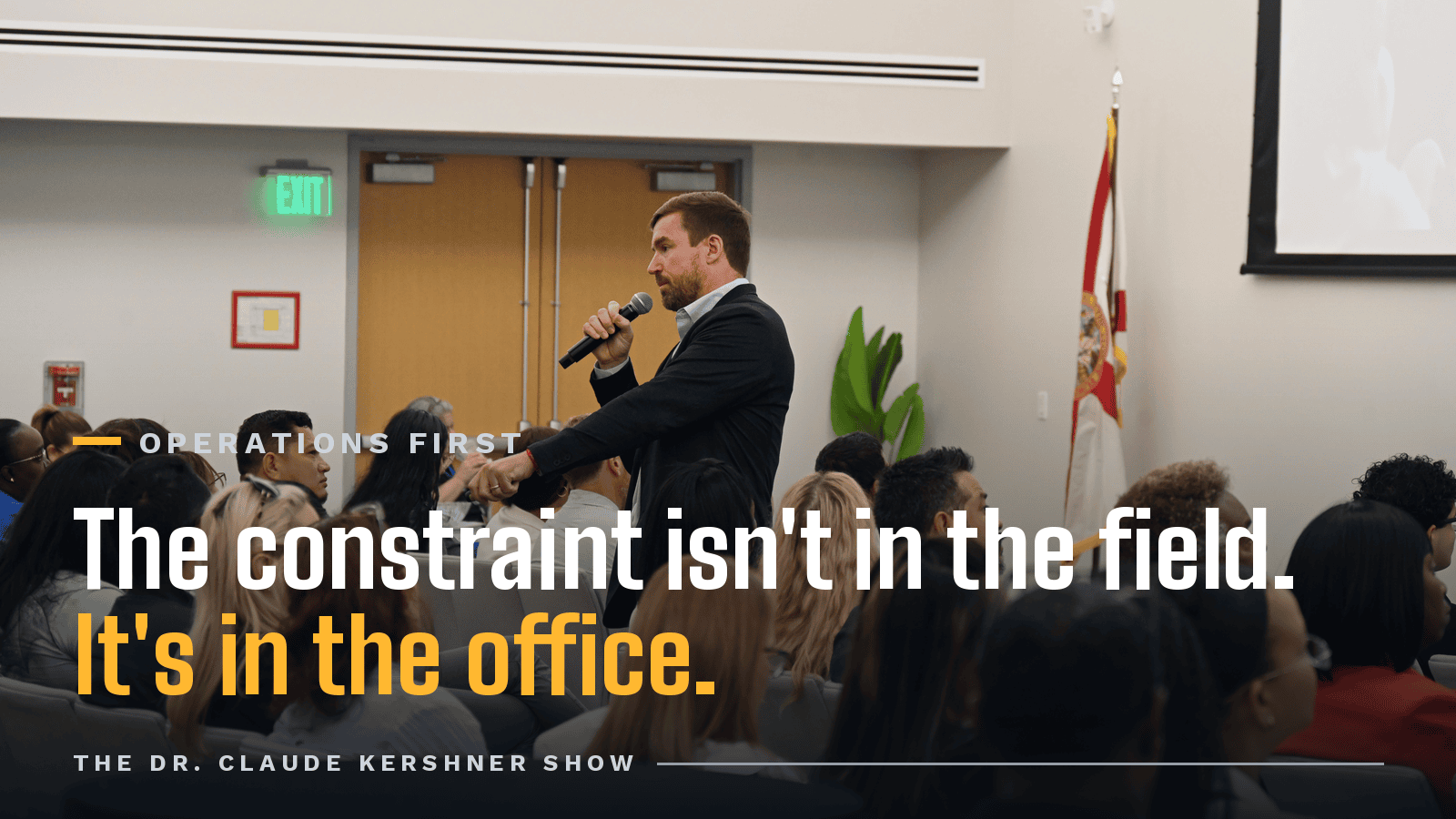
The one-workflow approach to AI is bottleneck theory in action. When we map a service company’s process — every quote, every schedule change, every invoice, every moment of truth with a customer — the constraint is almost never the technician’s skill. It’s an office workflow running at a fraction of the field’s capacity. Relieve that constraint with AI, and the whole system breathes. That’s not a technology insight; it’s an operations management insight that happens to have a brand-new set of tools available.
We’re Ready. Let’s Go.
Trade and service businesses are mostly small, family-run companies — and I believe with everything in me that they are ready for this moment. You don’t need a CTO. You don’t need a six-figure software budget. You need curiosity, one workflow, and a willingness to ask better questions about where your time goes.
If that’s you, I’m more than willing to help — we’ve already done it for several businesses and the results have been powerful. Reach out here, grab a copy of Deemed Essential to go deeper on the purpose behind the work, and start asking the questions.
The field stays human. The office gets intelligent. And the companies that embrace both will serve their customers — and their families — for generations.
Recommended Reading
- Jimmy John’s vs. Broadway Subs: A Tale of Efficiency and Differentiation
- Leveraging the Life-Cycle Framework: From Lifestyle Business to Managed Growth
- The Manager vs. Entrepreneur
Dr. Claude B. Kershner IV, DBA, is a professor of leadership, management, and innovation, a lifelong trade-service entrepreneur, author of Deemed Essential: Finding Greatness Through the Business of Serving Others, and host of The Dr. Claude Kershner Show.
Free · 5 minutes · The Kershner Lab
How effective is your leadership, really?
Take the free five-minute Leadership Effectiveness self-assessment from The Kershner Lab and get a personalized profile of your strengths and growth areas.
Take the Leadership Effectiveness assessment → See all assessments