
From Classroom to Marketplace: Reflections on Facilitating the Inaugural Capstone Consulting Experience
A semester spent watching senior Bachelor of Applied Science students step out of student/intern mindsets and into the role of process consultants — serving real entrepreneurs in our Miami–Dade community through the Build Up Program at The Idea Center at Miami Dade College, in partnership with the Urban Poverty & Business Initiative (UPBI) at the University of Notre Dame.
By Dr. Claude B. Kershner IV — Assistant Professor of Leadership & Management Innovation, Miami Dade College
For the first time at Miami Dade College, our Capstone in Project Supervision and Management (MAN 4900) was rebuilt around a single, demanding question: did this move the business forward? No midterms. No finals. No quizzes. Just real entrepreneurs, real problems, and senior students asked to behave less like students and more like the consultants their clients already needed them to be.
What follows is my professorial reflection on Spring 2026 — the inaugural cohort of a consulting course built on top of an evidence-based entrepreneurship framework, and the first time I have watched a class of working adults translate eighty steps of theory into deliverables a small business can actually use on Monday morning.
The Partnership: Build Up, UPBI, and the Idea Center
The Capstone consulting phase does not stand alone. It is the third stage of a longer entrepreneurial pipeline operated by The Build Up Program at The Idea Center at Miami Dade College, which in turn is part of the Urban Poverty & Business Initiative (UPBI) housed at the McKenna Center for Human Development and Global Business at the University of Notre Dame, Keough School of Global Affairs.
A program description published by UPBI captures the mission with admirable precision:
“The Build Up Program at The Idea Center at Miami Dade College leverages the UPBI methodology, in partnership with the University of Notre Dame, to empower individuals in economically disadvantaged situations to launch their own ventures and improve their quality of life through entrepreneurship.”
UPBI program description
Locally, that mission is necessary because the demographics demand it. Miami–Dade County is one of the most foreign-born metropolitan areas in the United States: 54% of residents are foreign-born and 75% of business owners are immigrants. 14.1% of residents live below the federal poverty line, and another 34% fall into the ALICE category — Asset Limited, Income Constrained, Employed — meaning they work, sometimes more than one job, and still cannot consistently meet basic household needs.
This is where the consulting class lives.
How the Program Works: A Pathway, Not a Bandage
UPBI operates as a global network active in more than 55 cities, serving over 3,000 entrepreneurs each year and helping more than 1,100 ventures move toward financial stability. Each local partner delivers the same research-based framework while contributing insights back to the broader network. The Build Up Program implements that framework through a structured, three-phase pathway:
Phase 1 — Bootcamp (6 weeks)
Six weeks of intensive instruction in opportunity recognition, business model fundamentals, profit models, breakeven analysis, segmentation, and the discipline of knowing your numbers.
Phase 2 — Mentorship (~4 months)
One-to-one work with seasoned business leaders. Founders apply what they have learned, navigate operational and personal frictions, and stay accountable to measurable progress.
Phase 3 — Student Consulting (~4 months) — this is us
Senior-level student teams provide structured deliverables — research, financials, operational recommendations, marketing systems — designed to actually be implemented inside the founder’s business.
A pathway, not a bandage. A long-term build, not a short-term fix.
The Course Design (MAN 4900): What We Asked of Students
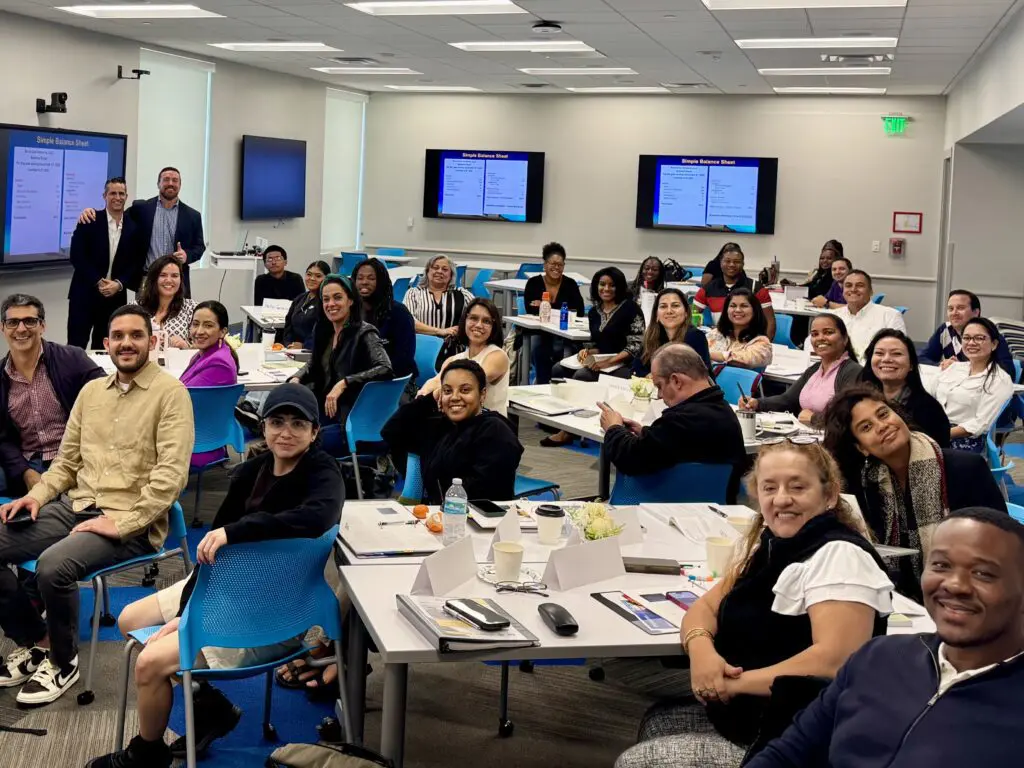
Our students were senior-level Bachelor of Applied Science (BAS) candidates in Leadership and Management Innovation. Most were not 21-year-old undergraduates. They were husbands, wives, fathers, mothers, and full-time professionals returning to finish their degrees in the evening. About 80% fit that working-adult profile; about 20% were more traditional-age seniors. Several had decades of operating experience in healthcare, technology, education, hospitality, and operations.
The course was structured around a small set of non-negotiable expectations:
- Eight consulting teams. Each of three to four students, with a self-chosen team name and a written rationale for that name.
- Two entrepreneurs per team. Sixteen Build Up founders were paired with the eight teams using a skills-inventory matching exercise.
- Two deliverables per entrepreneur. Four implementable deliverables per team, per semester — not reports, not analyses, but problems solved.
- Weekly cadence. A formal client meeting cadence plus a documented internal team meeting each week, captured with attendees, time, and discussion notes.
- An individual reflection journal. Submitted at the end of the semester, modeled (transparently) on a journal I kept while working with two entrepreneurial clients in South Africa in 2010.
Grading deliberately excluded effort, motivation, and “organization.” We graded skills and outcomes against one operational test: did the work move the business forward in a way the entrepreneur could still feel twelve months from now?
The Mindset Shift: Process Consulting

The single hardest pedagogical move of the semester was redefining what a consultant is. The students arrived with a help-desk model in their heads — you ask, I answer — or a deck-contractor model — you describe what you want, I go and build it. Both are wrong for early-stage entrepreneurs.
Drawing on the process consulting tradition (Schein and others) and Dr. Michael Morris’ entrepreneurship pedagogy at Notre Dame, we coached students to operate with a different posture:
| A consultant is NOT… | A consultant IS… |
|---|---|
| A help desk at the airport (giving advice). | A facilitator who helps the founder think more clearly. |
| A deck contractor (solving the problem for them). | A partner who solves the problem with them. |
| An expert with answers. | A creative problem solver who works on the business, not just in it. |
The emphasis was unromantic and operational: listening, strong questions, empathy, and co-creation. We told the students that effort alone would not earn them a passing grade. We also told the entrepreneurs the same thing — that this is a 50/50 collaboration, that the better they answer the team’s questions, the better the team can serve them, and that disengagement (on either side) would be addressed directly rather than absorbed.
The Arc of the Semester
Across sixteen weeks, the Capstone followed a clear progression that mirrors how an actual consulting engagement unfolds outside a classroom:
- Skills inventory. Every student documented what they could actually do — Canva, financial interpretation, survey design, copywriting, market analysis — before any client was assigned.
- Team formation and naming. Teams formed, agreed to a meeting cadence, and chose names with rationales. The names that emerged — CCP Consulting, Working Moms Consulting, Five Star Consulting Group, Visionary Consulting, and others — carried more identity than I expected.
- Entrepreneur matching. Sixteen Build Up founders were paired to teams based on industry fit, business stage, and team capability.
- First client meeting and needs assessment. Teams introduced themselves, set expectations, and asked questions. Some clients pushed back. Some were initially unresponsive. Both are normal in business.
- Letter of engagement. A signed agreement clarifying what the team would deliver, what they needed from the entrepreneur, and how the relationship would operate.
- Business model discovery. Per the UPBI methodology, students built the founder’s business model themselves by asking the right questions — even when the founder already had one. This forced the deep understanding that any useful deliverable depends on.
- Two deliverables per client. Co-created with the entrepreneur, refined under feedback, and submitted in Canvas with the client’s implementation in mind.
- Final presentations. Four nights of team presentations to me, to invited UPBI/Idea Center guests, and to the entrepreneurs themselves.
Evidence-Based Frameworks That Showed Up Every Week

Because this was a Bachelor of Applied Science program, the entire semester was organized around tools the students could pick up, hold, and re-use. Among the recurring frameworks — many drawn from Dr. Morris’ UPBI curriculum — were:
- Opportunity recognition vs. concept. Distinguishing a real, time-sensitive market opportunity from a feature or product idea.
- The four types of value. Functional, emotional, social, and self-expressive value — and where each one shows up in pricing.
- Profit model and breakeven. Cost structure, contribution margin, breakeven, and cash flow — the foundation behind every recommendation we made.
- Segmentation and targeting. Who specifically does this business serve, and how do we reach them efficiently?
- Marketing as “anything that makes transactions happen.” A working definition that pushed students past surface-level social-media thinking.
- Guerrilla approaches and resource leveraging. Creativity under constraint, drawn from the UPBI exercises (Mateo, Yolanda, Corey, Ziyanda, Kofi).
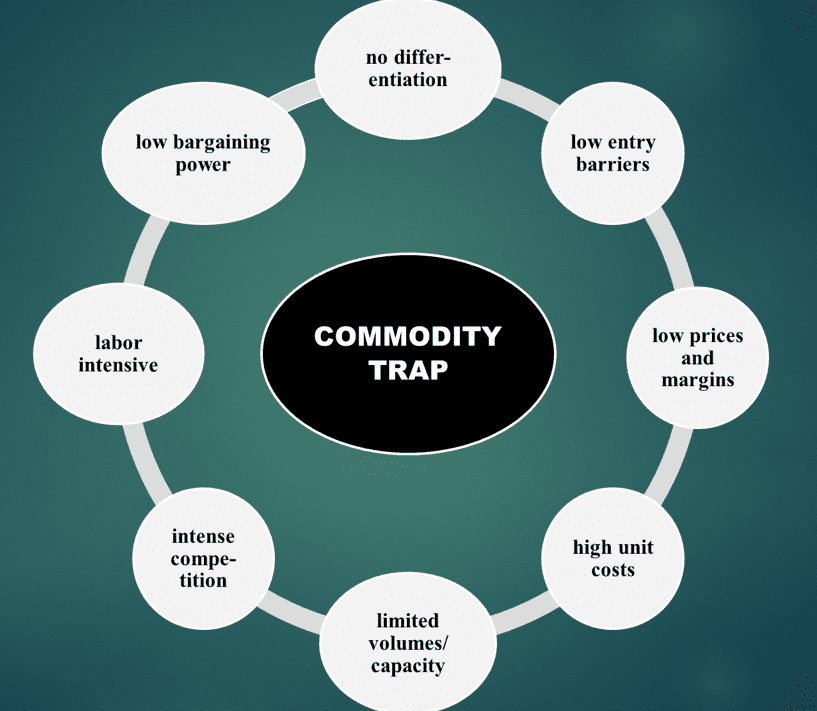
- The commodity trap. Why differentiated value matters, and how a small business escapes price-only competition.
- The Business Model Canvas. Used as a discovery instrument, not a finished artifact — a way to surface what the founder actually believes about their own business.
What the Students Actually Built
Across the eight teams, sixteen entrepreneurs received thirty-two implementable deliverables by the end of the semester. The variety reflected the variety of the businesses themselves — cybersecurity, faith-based digital art, healthcare technology, sustainable fashion, professional services, and a workforce-development app, among others. Representative deliverables included:
- A faith-based mental-wellness marketing plan with a content calendar, customer-journey mapping, and a brand-aligned visual system.
- A B2B healthcare LinkedIn authority strategy, including ideal customer profile, decision-maker personas, and KPI dashboards.
- A user-research survey instrument and analysis that took a career-development app from a vague idea to a validated MVP concept (goal-tracking, accountability features, freemium pricing).
- A market segmentation and outreach plan for a service business operating in a saturated category.
- An inventory and operations strategy for a product-based founder trying to stabilize cash conversion.
- A repeatable sales script and lead-qualification framework for a founder selling into small medical practices.
- An AI-augmented marketing-content workflow (blog generation, social automation, email sequences) for a healthcare platform.
None of these were academic exercises. Each was scoped against the constraint that the entrepreneur must be able to use the work without us in the room.
What the Students Said They Learned

Across reflection journals, peer evaluations, and final presentations, a small set of themes recurred — not because the students were prompted to say them, but because the experience produced them. I am intentionally withholding names; what follows are paraphrased, anonymized patterns:
“At the start I was thoughtful but uncertain — I had never done consulting in a classroom context. Over time that uncertainty turned into confidence and clarity, and I realized my skills actually were useful to a real business.”
Working professional returning for the BAS, paraphrased
“The hardest part was setting expectations and communication. The client pushed back. There was resistance. But that was the lesson: business is not a smooth path, and adapting to that is the work.”
Team lead reflecting on a difficult engagement
“I learned more in this class than in any other business class I have taken. The work forced judgment, accountability, and iteration. You cannot fake any of that in front of a client.”
Senior BAS student
“I stopped thinking about ‘what does the professor want?’ and started asking ‘what does this entrepreneur actually need?’ That shift changed how I worked.”
Reflection from a team that submitted four deliverables
There is a published research base behind this kind of result. Service-learning and applied-consulting course designs — especially when paired with structured frameworks and real client accountability — have been linked in the entrepreneurship education literature to higher self-efficacy, sharper opportunity recognition, and durable behavioral change. The transition I watched these students make is consistent with that body of evidence. It also looks, frankly, like growing up as a professional.
Presentation Nights: April 21st and 28th
Final presentations were not a pageant. Twelve minutes of presentation, five to six minutes of question-and-answer, and a single discipline imposed on every team:
- Problem identification. What did you actually find?
- Process. How did you investigate it?
- Solution. What did you deliver?
- Implementation. How does the client use it next week, without you?
Across the four presenting teams — CCP Consulting, Catalyst Consulting, Ignite Growth Consulting, Working Moms Consulting, Five Star Consulting Group, SEA Consulting, Diversify Consultants, and Visionary Consulting — every one of them met that bar. Several entrepreneurs joined live to hear the work being summarized back to them. A few asked follow-up questions that, by the standards of the first day of class, the students would not have known how to answer.
What I Learned as the Faculty Facilitator

Three observations stand out, all of which I will carry into Fall 2026:
1. Ambiguity is the curriculum. The hardest content of the semester was not theoretical — it was a client who did not respond, a brief that kept changing, and a deliverable that needed to be redefined in week ten. Students who learned to operate in that ambiguity grew faster than students who did not. That is also what entrepreneurship looks like.
2. Process consulting must be taught explicitly. Students do not arrive knowing the difference between giving advice, doing the work for the client, and helping the client think. They will default to the first two. Naming the third — and grading against it — is the intervention.
3. Skills, not traits. The most consequential decision in the syllabus was the move away from grading effort, organization, and motivation, and toward grading skills and outcomes. It changed the tone of every conversation. It also produced better deliverables.
Gratitude and Spring 2026
There is no Capstone consulting course at Miami Dade College without the people who built the architecture around it. Deep thanks to Dr. Michael Morris at the McKenna Center for the curriculum, the rigor, and the conviction that anyone is capable of being an entrepreneur. To Jorge Guillén for his leadership at The Idea Center and for being the steady operational partner on the Miami–Dade side. To the Idea Center at Miami Dade College and the University of Notre Dame for the institutional commitment that makes this possible. And to the sixteen Build Up entrepreneurs who agreed to be served, questioned, and challenged by a class of student consultants — thank you for trusting the process.
To the inaugural cohort of student consultants: you set the standard. The next class will inherit your example.
“You do not merely want to be considered the best of the best. You want to be considered the only ones who do what you do.”
— Jerry Garcia (a closing line for our class, and now for this semester)
Sources & Further Reading
- Urban Poverty & Business Initiative (UPBI)
- UPBI — McKenna Center for Human Development and Global Business, University of Notre Dame
- Build Up Program — The Idea Center at Miami Dade College
- Build Up Program Description (PDF, UPBI)
- MDC News — Build Up Program Launch
- Refresh Miami — Build Up Coverage
- WLRN — Build Up Program Coverage
Dr. Claude B. Kershner IV is Assistant Professor of Leadership & Management Innovation at Miami Dade College, Homestead Campus. He facilitated the inaugural Capstone consulting cohort in Spring 2026.
You may also like:
- Why Discussion-Based Teaching Matters: Learning with Dreamers
- Chasing the Expert is a Mistake: The Power of Collaborative Learning
Free · 5 minutes · The Kershner Lab
Do you think like an entrepreneur?
The free Entrepreneurial Mindset self-assessment from The Kershner Lab takes five minutes and shows where your opportunity-seeking, resilience, and action habits stand today.
Take the Entrepreneurial Mindset assessment → See all assessments