
Jimmy John’s vs. Broadway Subs: A Tale of Efficiency and Differentiation
Standardization, authenticity, and what two sandwiches can teach us about strategy, staffing, and long term business sustainability
The Examined Life in Everyday Business
At the start of every class, I remind my students that the world itself is our greatest laboratory. Socrates said, “An unexamined life is not worth living.” To me, that means cultivating the habit of looking at everyday experiences not just as consumers, but as social scientists.
Why does an employee greet you the way they do? Why does one restaurant rush you while another celebrates you? These are not random occurrences—they are intentional or structural results of strategy, leadership, and culture. By examining them closely, we sharpen an entrepreneurial mindset that helps us build businesses that are effective, sustainable, and beneficial to our communities and families.
Two sandwich shops I visited recently—Jimmy John’s, a national franchise, and Broadway Subs, a local independent shop in Homestead—offered me the perfect contrast. Both delivered a sandwich. But the details of each visit, down to the greetings, the eye contact, the fries I didn’t order, and even who likely owns the place, revealed profound lessons about entrepreneurship.
Jimmy John’s: Efficiency Without Authenticity
When I walk into Jimmy John’s, the greeting is always the same: “Hello, thanks for being here.” But the words are flat, the eye contact absent. Even when I’m the only customer in the store, the greeting feels perfunctory, as though recited from a script.
This is no accident. Jimmy John’s runs on a model of efficiency and standardization. Their resources are leveraged toward minimizing variability: scripted greetings, simple menus, and assembly-line preparation. This creates economies of scale—lower costs, faster service, and easy replication across hundreds of stores.

The downside is authenticity. When I pause to decide, I feel rushed. When I ask for a substitution, I sense irritation. Why? Because my customization slows down the machine. In this system, employees aren’t incentivized to care about me personally; they’re incentivized to process transactions.
This is also where staffing strategy plays a role. Jimmy John’s employees are hourly workers with limited ties to the ownership structure. They can take or leave the job; their sense of identity is not bound up with the brand. As a result, many see themselves as executing tasks rather than co-creating experiences. This is a classic example of the agency problem in organizational theory: employees’ incentives are not fully aligned with owners’ incentives. The owner wants lifetime loyalty from customers; the employee just wants to finish the shift.
And yet, the system works for its chosen customer segment. Maybe you’re traveling in a new town. Maybe you’re short on time between meetings. Maybe you just want something predictable. Jimmy John’s delivers exactly that. The brand itself is the reassurance.
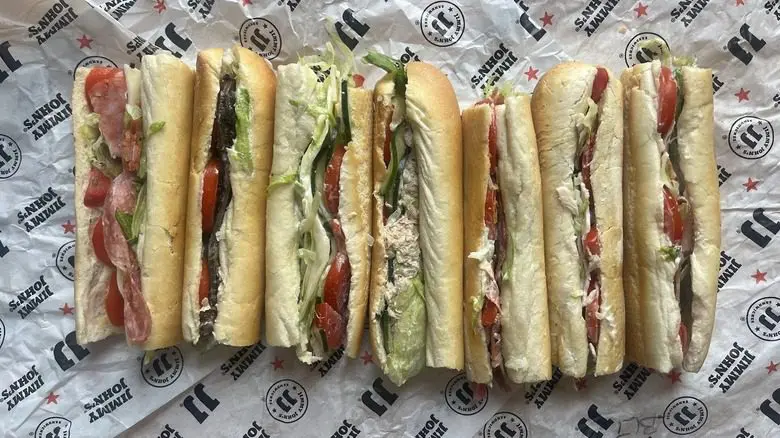
But the entrepreneurial question lingers: can a system that treats every customer the same, and every interaction as a transaction, build lasting loyalty? Or is it forever vulnerable to the commodity trap, where speed and price are the only levers of competition?
Broadway Subs: Differentiation Through Authenticity
Now consider Broadway Subs. The moment I opened the door, a bell chimed. The woman at the counter looked up—smiling warmly despite being mid-conversation with another customer. Behind her, the kitchen staff glanced up, acknowledged me with nods, even subtle smiles. This was not surface acting; it was authentic.

When I said it was my first visit, she announced: “We have a first-time guest!” The staff responded with cheers. Suddenly, I wasn’t a stranger; I was part of their story.
Looking at the menu, I admitted I was undecided. She leaned in: “What are you thinking?” I said I was from Philadelphia, and the cheesesteak caught my eye. She lit up: “Then we’re going to make this a great one for you.”
She walked me through the details: six-inch or twelve-inch, mayo or no mayo, lettuce or not. Each question slowed down the process but drew me in further. And then came the guerrilla tactic: “I’ll give you a handful of fries on the house so you’ll know if you want them next time.” She even slipped me a complimentary bottle of water.
The sandwich? Absolutely delicious—a $19 cheesesteak that tasted like home. The staff member personally delivered it, checked on me, and even wiped down my table. Around me, other customers contributed to the atmosphere: two men offered me their booths as they finished, a gesture that mirrored the culture of generosity the staff had modeled.

Here, the likely staffing model matters. It could very well be that the people working there are family members or even owners themselves. That sense of ownership identity explains why they act as if every customer matters—because, to them, every customer does. Their livelihood is directly tied to the experience they create. They clean tables, cheer new guests, and offer small extras not because corporate told them to, but because it feels natural when you’re taking care of your own business.
But there’s a trade-off. You can run one or two shops this way. You can’t scale it to hundreds. There aren’t enough family members to staff a statewide chain. At some point, the same agency problem appears—you delegate to managers, then staff, whose incentives are weaker and less tied to ownership. The culture becomes harder to replicate.
And yet, Broadway Subs demonstrates the power of resource leverage on a small scale. They use guerrilla tactics—like free fries and applause—that cost almost nothing but create outsized emotional impact. They know their segment: locals who want connection, authenticity, and a sense of community. They can’t outcompete Jimmy John’s on price or speed, but they can outcompete them on meaning.
Strategy in the Details
So what do these two models teach us about Business-Level Strategy?
- Jimmy John’s (Standardization/Efficiency)
- Resources: Supply chain scale, scripted labor, standardized processes.
- Customer Segment: Time-constrained, cost-conscious, seeking predictability.
- Tactics: Minimize complexity, maximize throughput.
- Staffing: Employees are hourly, disassociated from ownership; agency problem reduces authenticity.
- Trade-off: Efficient, but vulnerable to commoditization.
- Broadway Subs (Differentiation/Customization)
- Resources: Staff culture, likely family ownership, community trust.
- Customer Segment: Locals seeking quality, customization, and belonging.
- Tactics: Guerrilla gestures (free fries, applause), relational engagement, atmosphere of generosity.
- Staffing: Family or owner involvement creates natural ownership alignment. Difficult to scale beyond a few shops.
- Trade-off: Higher prices, lower efficiency; loyalty built on authenticity.
As customers, which would you prefer? The unauthentic but efficient sandwich, where you know what you’ll get every time? Or the slower, pricier, but authentic experience that feels unique and personal?
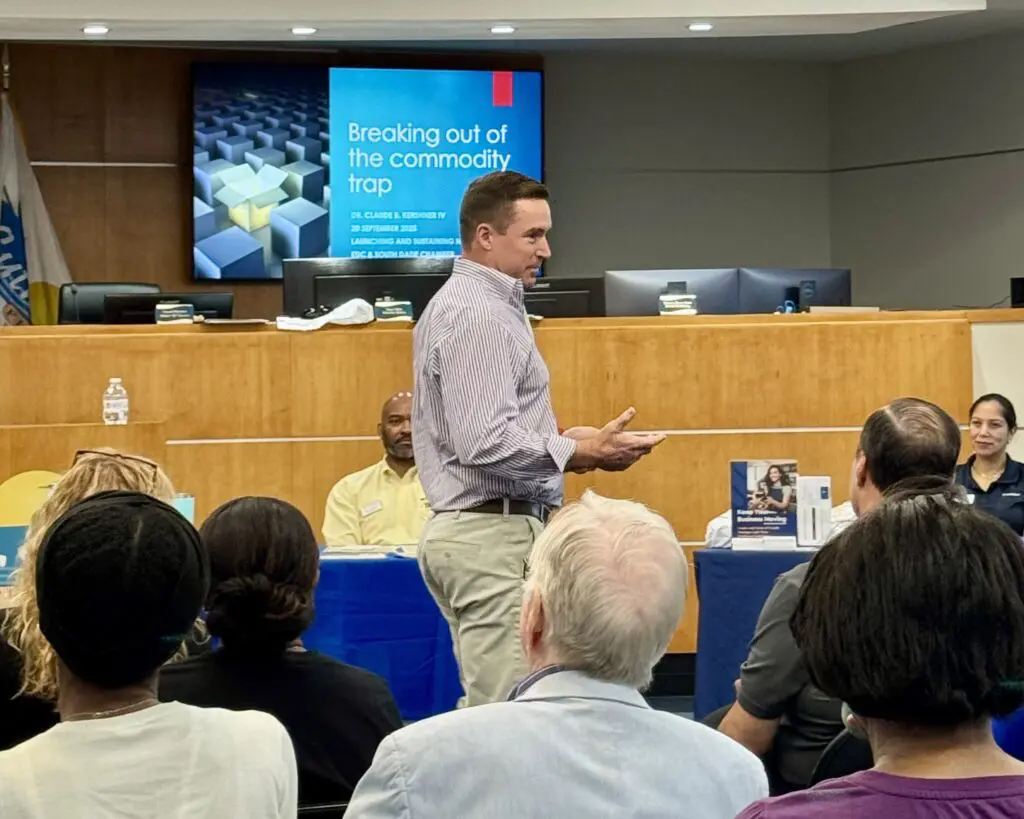
As entrepreneurs, which would you build? The scalable, standardized model? Or the differentiated, community-rooted model?
Both are valid. Both require clarity about resources, customer segments, and staffing realities. Both can succeed—but only if built intentionally.
Conclusion: Sandwiches, Staffing, and Strategy
Jimmy John’s gave me efficiency. Broadway Subs gave me belonging. Jimmy John’s leveraged scale; Broadway leveraged soul. Both models exist because different customers want different things at different times.
But here’s the larger point: entrepreneurship is the art of examining these moments, understanding the trade-offs, and designing intentionally. Staffing structures, customer segments, pricing strategies, and even small guerrilla tactics all add up to the experience we deliver.
For me, as a Philadelphian, the cheesesteak at Broadway Subs tasted like home. But beyond taste, it was the authenticity, the care, and the ownership culture that left the mark. And that’s why I’ll go back. Because in entrepreneurship, the sandwich may be the product—but the experience, the staffing, and the strategy are the business.
If you’d like to go deeper on these ideas, check out my recent episode of The Dr. Claude Kershner Show on breaking out of the commodity trap. You can listen here: Breaking Out of the Commodity Trap
Free · 5 minutes · The Kershner Lab
How effective is your leadership, really?
Take the free five-minute Leadership Effectiveness self-assessment from The Kershner Lab and get a personalized profile of your strengths and growth areas.
Take the Leadership Effectiveness assessment → See all assessments