
Who Wins the Future? Audience Perspectives Survey
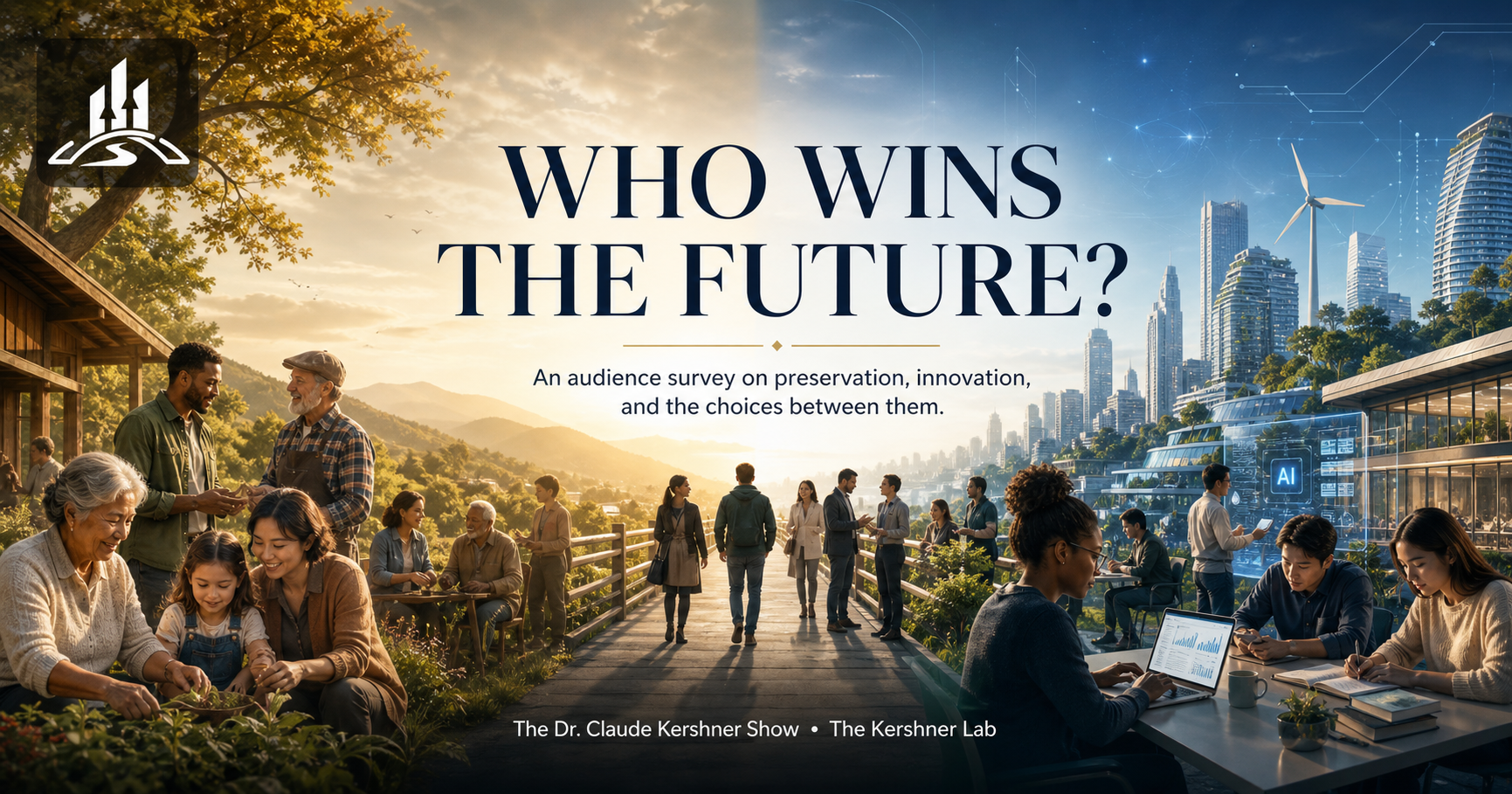
This is a listening project—not a test of which side you are on.
As a leadership and entrepreneurship educator and consultant, I want to better understand how people prioritize preservation, innovation, technology and enterprise—and whether they believe these goals can advance together. The goal is to teach these subjects more thoughtfully, facilitate better conversations and identify practical ways people with different priorities can work together.
This is an ongoing, informal audience survey with no fixed closing date. It is suitable for professionals, entrepreneurs, educators, students and anyone interested in the choices shaping our shared future.
Privacy and participation: The survey does not request your name or email. Broad demographic questions are optional. Please avoid including identifying information in written responses. If you choose to join The Dr. Claude Kershner Show email list after participating, that separate signup is not connected to your survey answers. This is an informal audience-listening project, not an academic study or diagnostic assessment.