Research Papers
🔬 Research Papers
The science behind the show.
Every episode of The Dr. Claude Kershner Show has research behind it. Peer-reviewed articles and foundational texts — organized by theme, linked to the episodes where Dr. Kershner discusses them. Follow the citations. Go deeper. Updated as new episodes and research are added.
Leadership & Organizational Behavior
| Paper / Source | Key Finding | Watch the Episode |
|---|---|---|
| Greenleaf, R.K. (1970). The Servant as Leader. | The foundational text — the leader’s role is to serve, and that service generates loyalty and organizational citizenship behavior. | ▶ The Servant Leader: Chapter Four of Deemed Essential |
| Organ, D.W. (1988). Organizational Citizenship Behavior. | Servant leadership behaviors predict discretionary employee effort above and beyond job requirements — the mechanism behind high-performance cultures. | ▶ The Servant Leader: Chapter Four of Deemed Essential |
| Mayer, Salovey, & Caruso (2004). Emotional Intelligence: Theory, Findings, and Implications. | EI predicts leadership effectiveness and affective commitment beyond IQ and personality traits. | ▶ Adapting to Your Boss’s Communication Style |
| Weick, K.E. (1995). Sensemaking in Organizations. | How leaders construct meaning from ambiguous situations — essential for navigating organizational change and crisis. | More episodes coming |
| Thomas, K.W., & Kilmann, R.H. (1974). Thomas-Kilmann Conflict Mode Instrument. | The five conflict modes and when each produces optimal outcomes — the research behind the TKI assessment. | ▶ Mastering Conflict Management & Negotiation |
Entrepreneurship & Strategic Management
| Paper / Source | Key Finding | Watch the Episode |
|---|---|---|
| Miller, D. (1983). The Correlates of Entrepreneurship. Management Science. | The seminal EO paper — risk-taking, innovativeness, and proactiveness as the three core dimensions of entrepreneurial firms. | ▶ Entrepreneurship Isn’t a Vibe — It’s Measurable |
| Covin, J.G., & Slevin, D.P. (1989). Strategic Management of Small Firms. Strategic Management Journal. | Refined EO and demonstrated its relationship to firm performance — the foundation of the EO-performance thesis. | ▶ Entrepreneurship Isn’t a Vibe — It’s Measurable |
| Hitt, Ireland, Camp, & Sexton (2001). Strategic Entrepreneurship. Strategic Management Journal. | Integrating opportunity-seeking (entrepreneurial) and advantage-seeking (strategic) behavior as the engine of wealth creation. | ▶ Entrepreneurship Isn’t a Vibe — It’s Measurable |
| Adizes, I. (1988). Corporate Lifecycles. | Organizations move through predictable lifecycle stages — the framework behind the Organizational Life Cycle Scale. | ▶ Moving from Startup Stage to Survival Stage |
AI, Work & the Future of Organizations
| Paper / Source | Key Finding | Watch the Episode |
|---|---|---|
| McKinsey Global Institute (2025). The State of AI in 2025. | AI adoption is accelerating — leadership behavior is the primary differentiator in competitive AI integration. | ▶ AI & The Future of Work | Innovation, Control & Human Leadership |
| Van de Ven, A.H. (1986). Central Problems in the Management of Innovation. Management Science. | Innovation is a social system problem, not a technical one — the organizational processes that enable or block new ideas. | ▶ Strategy & Technology: Format Wars, First Movers & Killer Apps |
📖 Published Scholarship
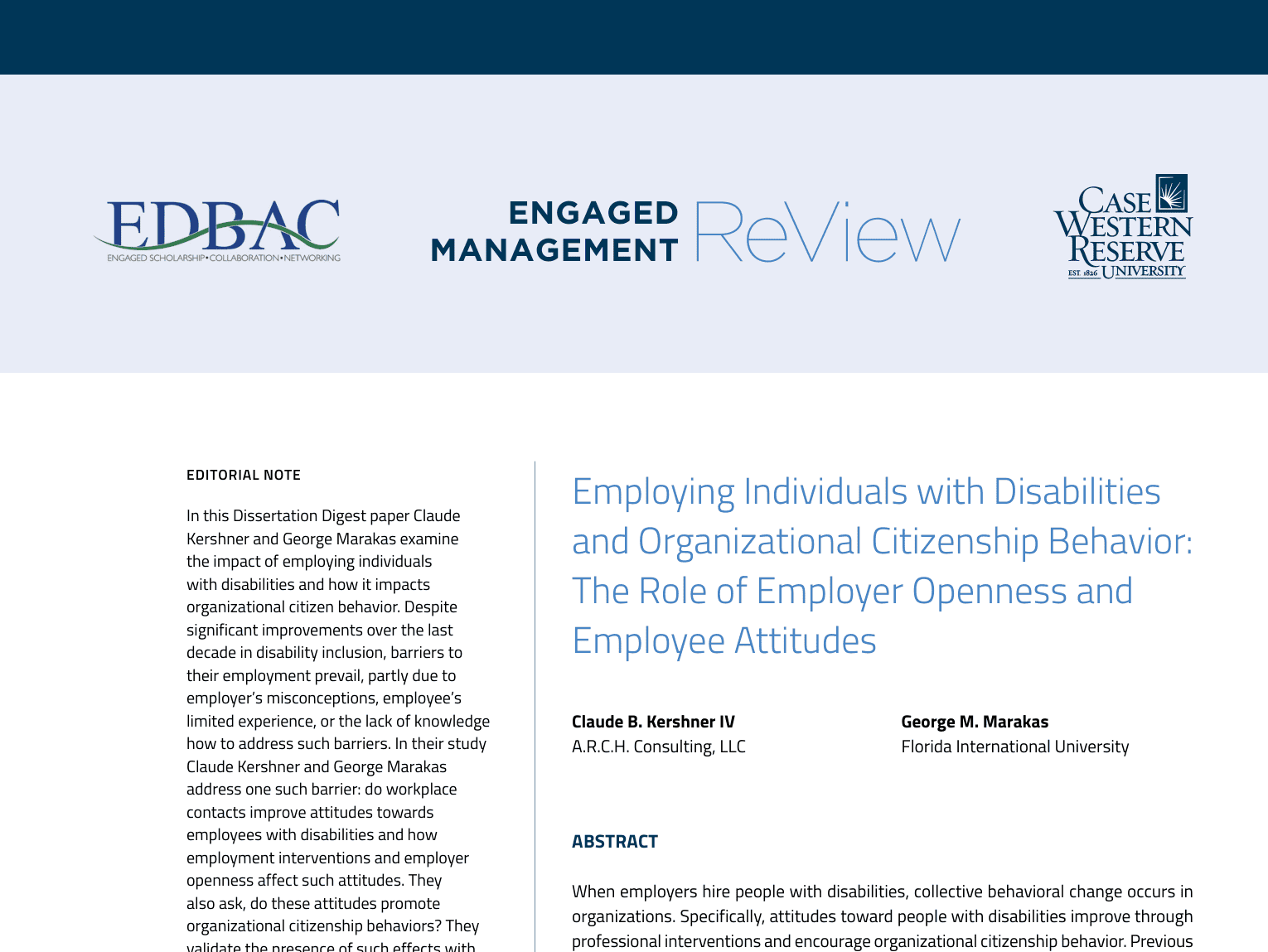
The research behind the show is also peer-reviewed, published scholarship. Kershner & Marakas — Engaged Management ReView, Vol. 7 No. 2, March 2024.
More published work coming as the research pipeline expands. The show is the practitioner voice; the scholarship is the foundation beneath it.
More published work coming as the research pipeline expands. The show is the practitioner voice; the scholarship is the foundation beneath it.
This repository grows with the show. As new episodes are published, research is added here with direct video links. Where open-access PDFs are available, the paper title links directly to the source. Paywalled articles can often be found via Google Scholar or your institution’s library.
Hear the Research, Not Just the Abstract
Dr. Kershner’s episodes translate this research into frameworks you can apply Monday morning. Every citation above has a conversation behind it.